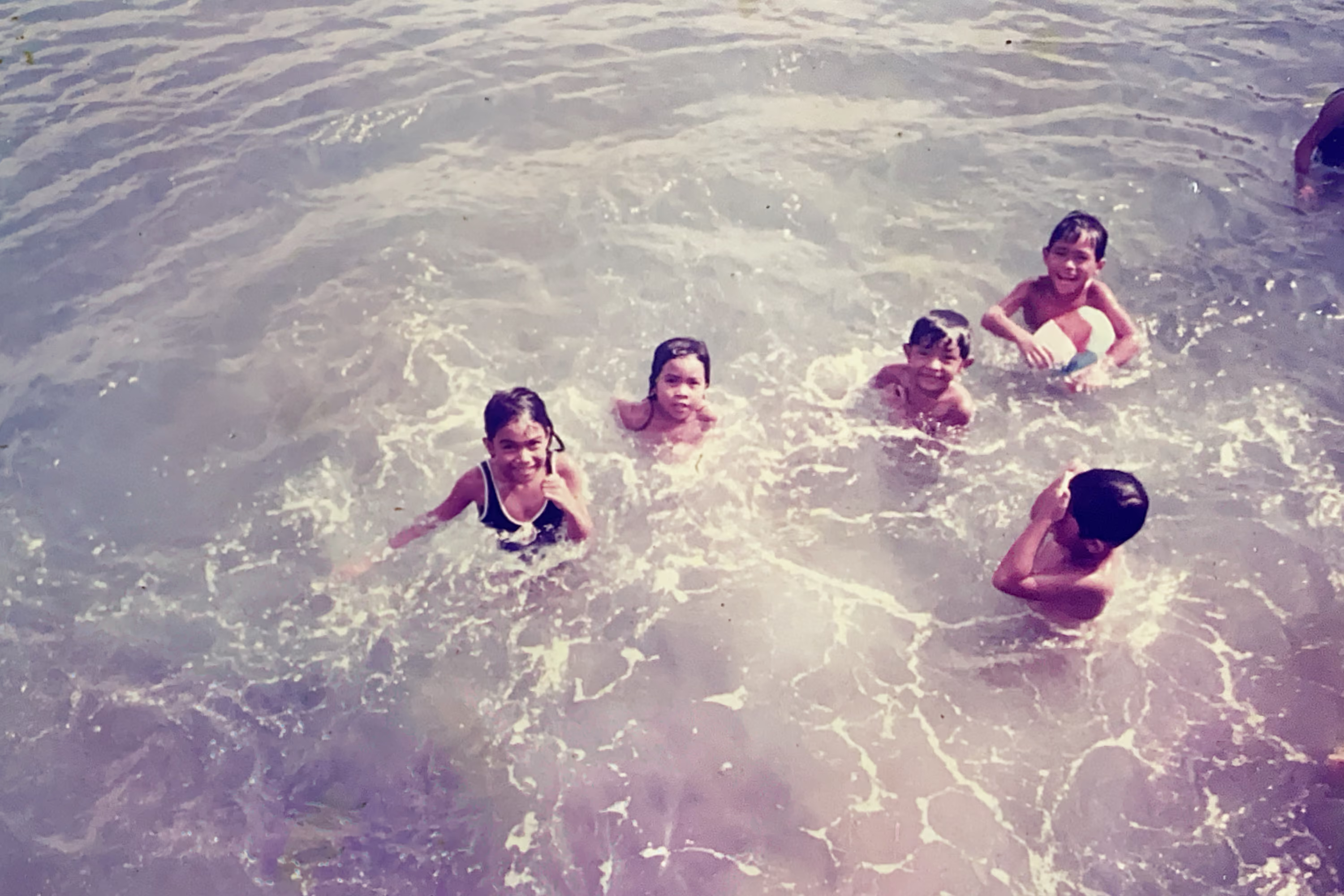



Orang Laut SG started as a ground-up initiative in 2020 that documents the stories of communities who used to live in Singapore's Southern islands.
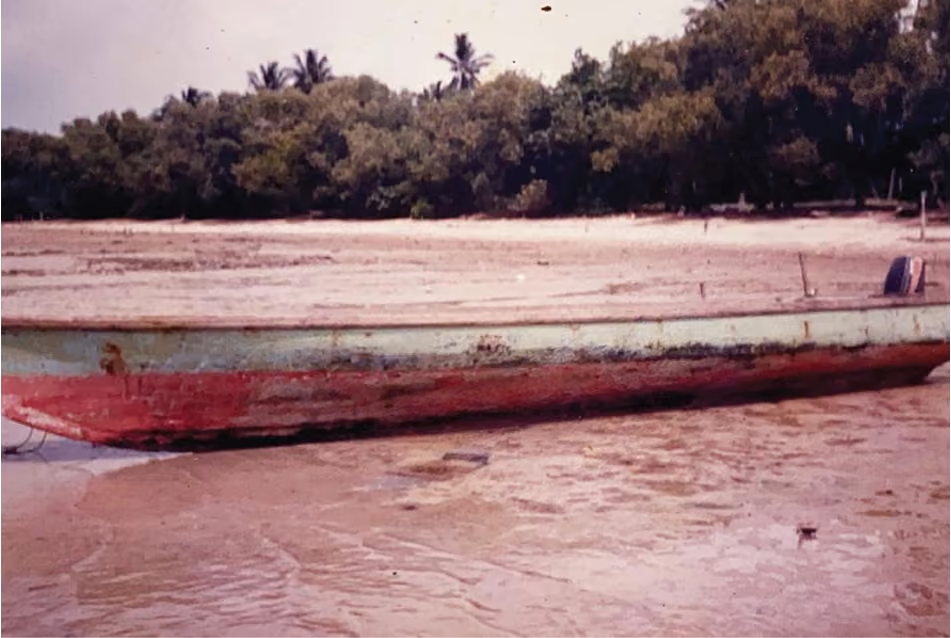
Today, Pulau Semakau is home to Singapore’s only offshore landfill and plays a vital role in the nation’s waste management system, and recently announced to be further developed as part of Singapore’s new Western Island that aims to reclaim to various islands and reefs for the purpose of “future industries, power infrastructure, and defense”.
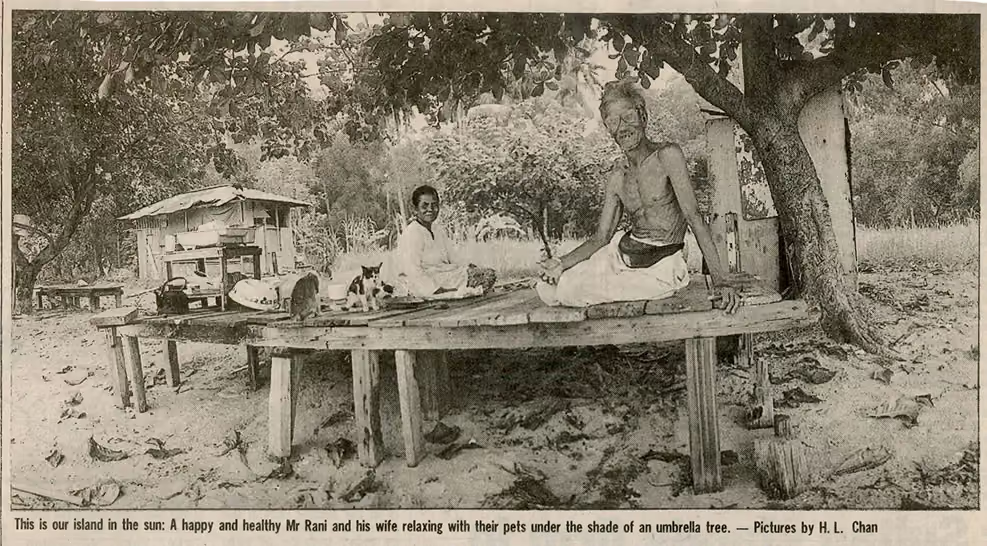
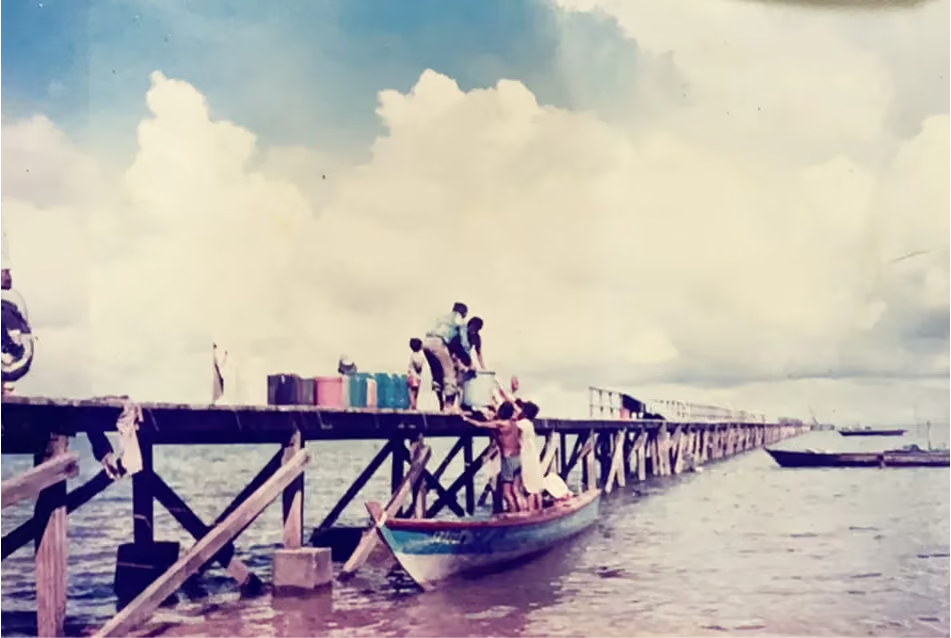
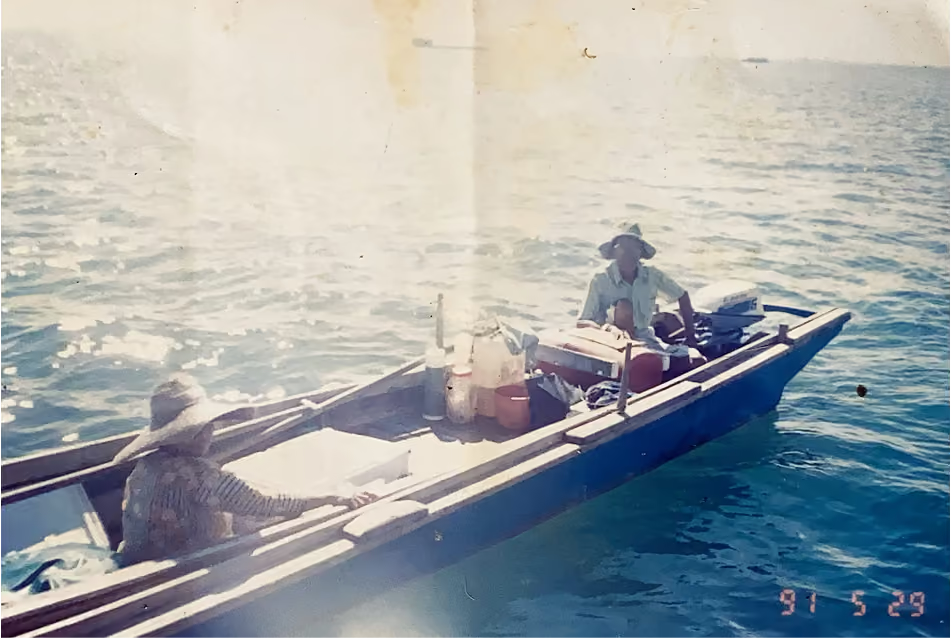
Yet beyond its present-day function, the island holds a much deeper significance. It is a place of ancestry, memory, and belonging, carrying the histories, relationships, and ways of life of the communities who once called it home.
.png)
More than half a decade ago, we were asked to leave the Southern Islands.
Across generations, this process of adaptation continues as former islanders and descendants redefine and reclaim their identities on their own terms, through cultural practice, community-building, advocacy, and the passing on of knowledge and memories. These identities are not fixed in the past, but continue to evolve as living expressions of belonging, resilience, and connection.
Who are the Orang Laut & Orang Pulau?
Orang Pulau and Orang Laut can overlap, but they are not necessarily interchangeable. How people identify may differ across families, islands, communities, and generations, and these identities continue to be defined and reclaimed by community members themselves.
Orang Pulau literally means “people of the islands” and is used by communities and descendants whose identities and histories are rooted in Singapore’s offshore islands, particularly the Southern Islands. It can function as a broad, place-based identity encompassing families from different islands, each with their own histories, practices, and relationships to land and sea.
Orang Laut literally means “people of the sea” and is a broad term associated with Indigenous maritime communities historically connected to the seas, islands, rivers, and coastal areas of Singapore and the wider Malay Archipelago. In and around Singapore, these include communities such as the Orang Seletar, Orang Kallang, Orang Gelam, and Orang Selat, among others.
These communities were distinct, with their own territories, histories, knowledge, and ways of life, even as they shared deep relationships with the maritime environment.
Why do we talk about Indigenous narratives?
In Singapore, the Indigenous status of the Malay people is formally recognised under Article 152 of the Constitution, which identifies Malays as the Indigenous people of Singapore. At the same time, “Malay” in Singapore should not be understood as a single or homogeneous identity. The broader Malay community includes people with diverse ancestral and cultural roots, including Javanese, Bugis, Baweanese (Boyanese), Minangkabau, and other communities from across the Malay Archipelago, whose identities and histories have developed in different ways within Singapore.
Within and alongside this broader Malay history are communities with longstanding relationships to Singapore’s islands, coasts, rivers, and seas, including communities known as the Orang Laut, Orang Pulau, Orang Seletar, Orang Kallang, Orang Gelam, and Orang Selat, among others. These communities are similarly diverse, with distinct histories, identities, territories, cultural practices, and relationships with land and sea.
We speak about Indigenous narratives because these histories, knowledge systems, and lived experiences are an important part of understanding Singapore, both past and present.
For many communities and their descendants, connections to place continue through cultural practices, maritime and ecological knowledge, food, language, oral histories, family memories, and contemporary forms of community life. These narratives also allow us to understand how communities have experienced and adapted to Singapore’s changing landscape, including relocation, urbanisation, and the transformation of its islands and coastlines.
At the same time, Indigeneity is complex and context-specific. How Indigenous peoples are defined, recognised, and understood differs across countries, legal frameworks, communities, and generations. A person or community categorised as Malay in Singapore may understand or be recognised differently elsewhere in the Malay Archipelago and the region. The terms and frameworks we use in Singapore should therefore not automatically be applied to communities in other national contexts.Our work does not seek to determine who is or is not Indigenous, nor to impose fixed categories upon communities.
We recognise the right of individuals and communities to define, express, and represent their identities on their own terms, guided by the principles of the United Nations Declaration on the Rights of Indigenous Peoples (UNDRIP). By creating space for Indigenous narratives, we seek to ensure that communities are not simply spoken about, but are able to speak for themselves and participate meaningfully in shaping how their histories, knowledge, cultures, and futures are understood.
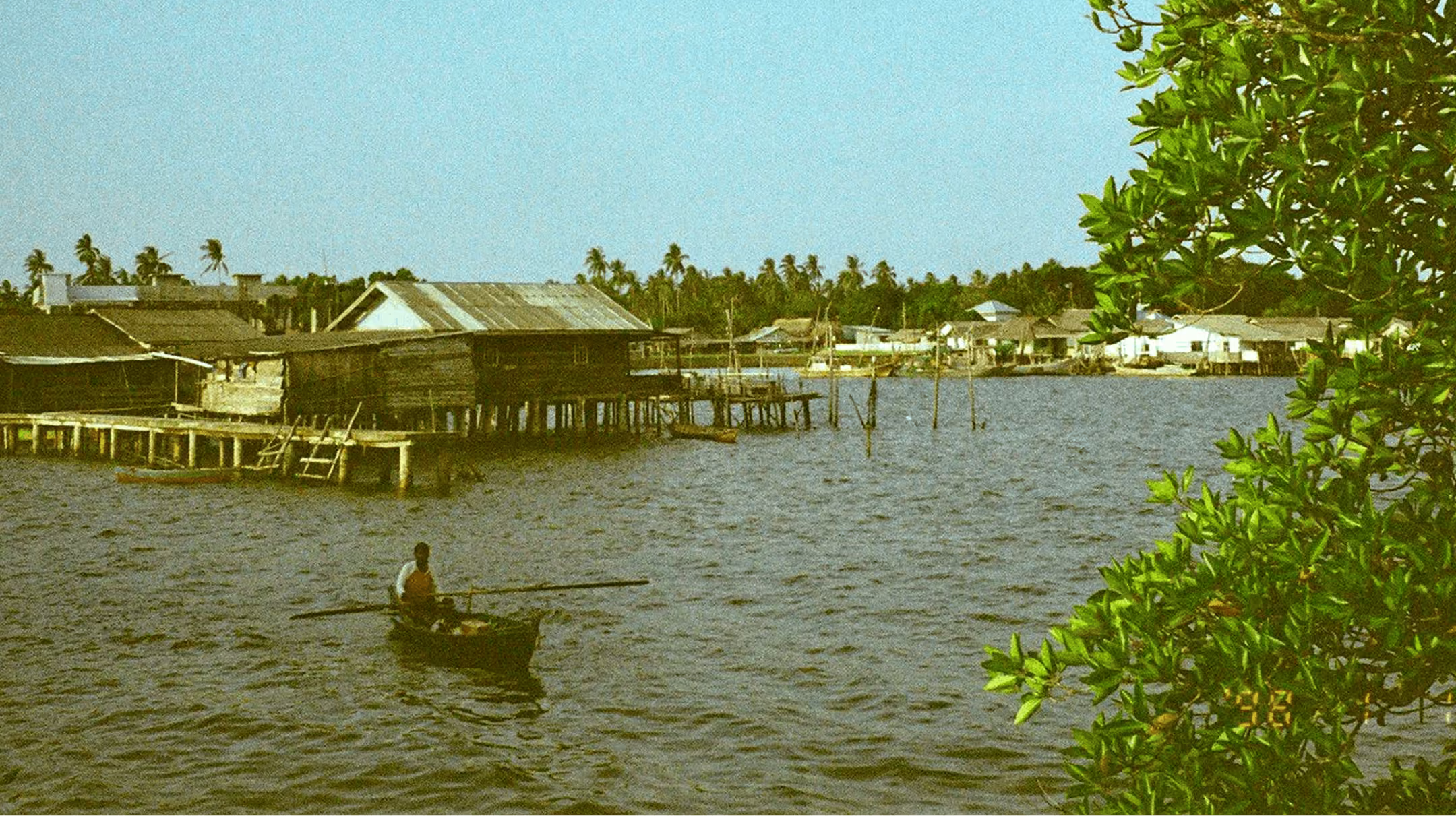
Your support helps sustain initiatives such as Hari Orang Pulau, enables us to research and document the traditions and knowledge of coastal communities, and support former Southern islanders and their descendants.


